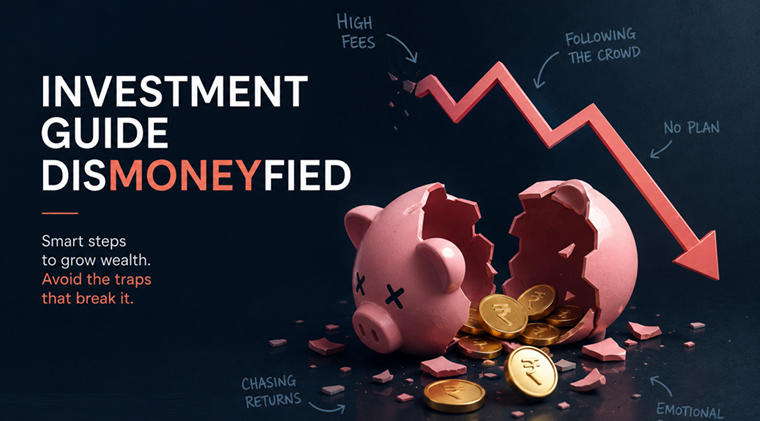

Investing is one of the most powerful tools available for building wealth, achieving financial independence, and creating a secure future. However, many people feel overwhelmed when they first enter the world of investing. Complex financial terminology, market volatility, and endless investment options often make the process appear intimidating. This comprehensive Investment Guide DisMoneyfied aims to simplify investing and provide a practical roadmap for beginners and experienced investors alike. Whether your goal is retirement planning, passive income generation, portfolio growth, or wealth preservation, understanding investment fundamentals is essential.
Successful investing is not about luck. It is about making informed decisions, managing risks effectively, and staying committed to a long-term strategy. This guide covers everything you need to know about investing, including asset classes, portfolio construction, diversification, risk management, market psychology, and advanced investment strategies.
By the end of this guide, you will have a clear understanding of how to invest wisely and confidently while building a strong financial future.
What Is Investment?
Investment is the process of allocating money into assets with the expectation of generating future returns. Instead of allowing money to remain idle in a savings account, investing enables capital to grow through appreciation, dividends, interest, or rental income.
Investments can include:
- Stocks
- Bonds
- Mutual funds
- Exchange-Traded Funds (ETFs)
- Real estate
- Commodities
- Cryptocurrency
- Business ownership
The primary objective of investing is to increase wealth over time while balancing potential risks and rewards.
Why Investing Matters
Investing plays a critical role in financial success because inflation continuously reduces the purchasing power of money.
Benefits of Investing
| Benefit | Description |
|---|---|
| Wealth Growth | Grow your money over time |
| Passive Income | Earn dividends, interest, and rental income |
| Inflation Protection | Maintain purchasing power |
| Financial Freedom | Achieve independence from active employment |
| Retirement Security | Build long-term retirement savings |
| Capital Appreciation | Increase the value of investments |
Without investing, achieving major financial goals becomes significantly more difficult.
Understanding Investment Goals
Every investor should begin by identifying financial objectives.
Common goals include:
Short-Term Goals
- Emergency fund creation
- Vacation savings
- Car purchase
- Home down payment
Medium-Term Goals
- Business startup
- Children’s education
- Property investment
Long-Term Goals
- Retirement planning
- Financial independence
- Generational wealth creation
Clear goals help determine appropriate investment strategies and risk tolerance.
The Relationship Between Risk and Reward
One of the most important principles in investing is the relationship between risk and reward.
Generally:
- Higher potential returns involve higher risks.
- Lower-risk investments usually generate lower returns.
Risk Levels
| Risk Level | Investment Type |
|---|---|
| Low | Savings Accounts, Government Bonds |
| Moderate | ETFs, Index Funds |
| High | Individual Stocks |
| Very High | Cryptocurrencies, Startups |
Understanding your risk tolerance is essential before investing.
Building an Investment Mindset
Successful investors share several common traits:
Patience
Wealth creation requires time and consistency.
Discipline
Avoid emotional decisions during market fluctuations.
Long-Term Thinking
Focus on years rather than days or weeks.
Continuous Learning
Markets evolve constantly.
Emotional Control
Fear and greed often lead to poor investment decisions.
The Power of Compound Interest
Compound interest is often called the eighth wonder of the world because it allows earnings to generate additional earnings over time.
For example:
- Initial investment: $10,000
- Annual return: 8%
- Time: 30 years
The investment grows substantially through compounding without additional contributions.
Compounding rewards consistency and patience more than market timing.
Types of Investments
Stocks
Stocks represent ownership in a company.
Advantages
- High growth potential
- Dividend income
- Liquidity
Disadvantages
- Market volatility
- Company-specific risks
Bonds
Bonds are loans made to governments or corporations.
Advantages
- Stable income
- Lower volatility
Disadvantages
- Lower returns
- Inflation risk
Mutual Funds
Mutual funds pool money from multiple investors.
Advantages
- Professional management
- Diversification
Disadvantages
- Management fees
- Less control
ETFs
Exchange-Traded Funds combine diversification with stock-like trading flexibility.
Benefits
- Lower fees
- Easy diversification
- High liquidity
ETFs have become one of the most popular investment vehicles worldwide.
Real Estate
Real estate remains a favorite wealth-building asset.
Income Sources
- Rental income
- Property appreciation
- Tax advantages
Risks
- Market downturns
- Maintenance costs
- Illiquidity
Commodities
Examples include:
- Gold
- Silver
- Oil
- Agricultural products
Commodities can help diversify portfolios during economic uncertainty.
Cryptocurrency
Digital assets have gained significant popularity.
Examples include:
- Bitcoin
- Ethereum
Investors should understand that cryptocurrencies are highly volatile and speculative.
Portfolio Diversification
Diversification involves spreading investments across multiple asset classes.
Benefits
- Reduces risk
- Improves stability
- Protects against market downturns
Example Portfolio
| Asset Class | Allocation |
|---|---|
| Stocks | 50% |
| Bonds | 20% |
| ETFs | 15% |
| Real Estate | 10% |
| Cash | 5% |
Diversification helps manage uncertainty and reduce dependence on a single investment.
Asset Allocation Strategies
Asset allocation determines how investments are distributed.
Conservative Portfolio
| Asset | Percentage |
|---|---|
| Bonds | 60% |
| Stocks | 30% |
| Cash | 10% |
Balanced Portfolio
| Asset | Percentage |
|---|---|
| Stocks | 50% |
| Bonds | 35% |
| Cash | 15% |
Aggressive Portfolio
| Asset | Percentage |
|---|---|
| Stocks | 80% |
| Bonds | 10% |
| Alternatives | 10% |
Investment Strategies Explained
Buy and Hold Strategy
Investors purchase quality assets and hold them for many years.
Benefits include:
- Lower taxes
- Reduced trading costs
- Compounding growth
Dollar-Cost Averaging
Invest a fixed amount regularly regardless of market conditions.
Advantages:
- Reduces timing risk
- Encourages discipline
- Lowers emotional investing
Value Investing
Popularized by Benjamin Graham and Warren Buffett.
Focuses on buying undervalued companies with strong fundamentals.
Growth Investing
Targets companies expected to grow faster than the overall market.
Characteristics:
- Higher potential returns
- Increased volatility
Dividend Investing
Investors seek companies that regularly distribute profits through dividends.
Benefits include:
- Passive income
- Portfolio stability
Understanding Market Cycles
Financial markets move in cycles.
Expansion
Economic growth increases.
Peak
Markets reach high valuations.
Contraction
Economic slowdown begins.
Recovery
Growth resumes.
Recognizing cycles helps investors maintain perspective.
Common Investment Mistakes
Chasing Performance
Past performance does not guarantee future returns.
Emotional Investing
Fear and greed often lead to losses.
Lack of Diversification
Concentrated investments increase risk.
Ignoring Fees
Fees reduce long-term returns.
Market Timing
Predicting short-term market movements is extremely difficult.
Retirement Investing
Retirement planning should begin as early as possible.
Key Principles
- Start early
- Invest consistently
- Diversify
- Rebalance regularly
The earlier investing begins, the greater the impact of compound growth.
Tax-Efficient Investing
Taxes affect investment returns significantly.
Strategies include:
- Long-term investing
- Tax-advantaged accounts
- Tax-loss harvesting
- Dividend management
Understanding tax implications can increase net returns.
Passive Income Through Investing
Passive income provides earnings with minimal ongoing effort.
Sources
| Investment | Income Source |
|---|---|
| Dividend Stocks | Dividends |
| Bonds | Interest |
| Real Estate | Rent |
| REITs | Distributions |
| ETFs | Dividends |
Passive income can accelerate financial independence.
Investment Guide DisMoneyfied Framework
A practical investing framework:
Step 1: Define Goals
Determine why you are investing.
Step 2: Build Emergency Savings
Maintain adequate cash reserves.
Step 3: Eliminate High-Interest Debt
Pay off expensive debt first.
Step 4: Create Investment Plan
Develop a diversified strategy.
Step 5: Invest Consistently
Use automated contributions.
Step 6: Monitor Progress
Review portfolio periodically.
Step 7: Stay Long Term Focused
Avoid reacting to short-term market noise.
Advanced Investing Concepts
Rebalancing
Restore portfolio allocations periodically.
Risk-Adjusted Returns
Measure returns relative to risk.
Alternative Investments
Examples include:
- Private equity
- Venture capital
- Hedge funds
Global Diversification
Invest across multiple countries and markets.
Technology and Modern Investing
Technology has transformed investing.
Modern Tools
- Robo-advisors
- Investment apps
- Automated portfolio management
- AI-powered analysis
These tools improve accessibility for individual investors.
Financial Freedom Through Investing
Financial freedom occurs when investment income covers living expenses.
Formula:
Financial Freedom = Passive Income ≥ Expenses
Investing consistently over decades can help achieve this goal.
Future Trends in Investing
Several trends are shaping the future:
Artificial Intelligence
AI-driven investment analysis continues growing.
Sustainable Investing
Environmental and social investing is increasing.
Fractional Investing
Investors can purchase portions of expensive assets.
Digital Assets
Blockchain technology continues evolving.
(FAQ)
What is Investment Guide DisMoneyfied?
Investment Guide DisMoneyfied is a comprehensive framework designed to simplify investing concepts and help individuals make informed financial decisions.
Is investing risky?
All investments carry risk. However, diversification and long-term investing can help reduce overall portfolio risk.
How much money do I need to start investing?
Many platforms allow investing with very small amounts, sometimes as little as $1 to $100.
Should beginners invest in stocks?
Beginners often start with diversified ETFs or index funds before investing heavily in individual stocks.
What is the best investment strategy?
The best strategy depends on individual goals, risk tolerance, and time horizon. Long-term diversified investing is commonly recommended.
How often should I review my portfolio?
Most investors review portfolios quarterly or annually.
What is portfolio diversification?
Diversification means spreading investments across multiple asset classes to reduce risk.
Can investing create passive income?
Yes. Dividend stocks, bonds, ETFs, REITs, and rental properties can generate passive income.
What is dollar-cost averaging?
Dollar-cost averaging involves investing a fixed amount regularly regardless of market conditions.
How long should I invest?
Investing is generally most effective when maintained over many years or decades.
Conclusion
The Investment Guide DisMoneyfied demonstrates that successful investing is not about predicting markets or finding shortcuts to wealth. Instead, it is built on education, discipline, diversification, patience, and consistency.
Whether you are a beginner taking your first investment steps or an experienced investor refining your strategy, the fundamental principles remain the same. Set clear financial goals, understand risk, diversify your portfolio, invest consistently, and maintain a long-term perspective.
By following the strategies outlined in this guide, investors can build sustainable wealth, generate passive income, protect against inflation, and move closer to achieving lasting financial freedom. The journey may take years, but disciplined investing remains one of the most reliable paths toward long-term financial success.